


Low Voltage Mounting Brackets
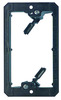
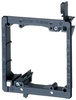
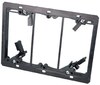
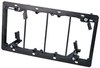
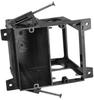
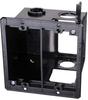
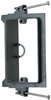
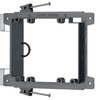
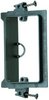
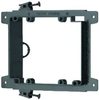
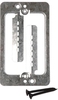
Low voltage mounting brackets are a necessity in both residential and commercial low voltage cable installations. A low voltage bracket is used to create a wall outlet for the installation of all low voltage cables and wires. Once installed in the wall, they create the needed base for mounting a wall plate to support various voice, data, video, and fiber optic connections. At Cabling Plus we offer a huge selection of low voltage mounting brackets to support both new and existing construction low voltage installations.
Use our Low Voltage Brackets for your low voltage cabling applications!
If you are a low voltage installer you are very familiar with low voltage mounting brackets. They are used in almost every installation where it is necessary to install new outlets to support low voltage cables, and their connections. Low voltage brackets have numerous names which include mud rings, low voltage mounting brackets, new construction brackets, existing construction brackets, or even old work mounting brackets. Regardless of the name you use, they are vital and necessary in all low voltage cable installations.
In an existing construction installation type, installing a low voltage bracket consists of cutting into a wall and placing the bracket right inside the wall. Most quality low voltage brackets allow you to use the bracket itself as the template to ensure you are cutting the right size hole for it to mount into. Low voltage brackets for existing construction have integrated ears located directly on the brackets that are used to tightly clamp them to the wall. In a new construction installation the low voltage brackets are used to create new outlets for supporting the installation of all low voltage wire and cables. In a new construction installation the low voltage mounting brackets are usually attached to the wall studs prior to installing drywall or adding the internal walls. The end result of both solutions is that you now have a bracket in the wall that can be used to mount any low voltage wall plate right on top of. Not only do low voltage bracket create the foundation for a wall plate, but they also protect the low voltage cables from being damaged as they enter and leave the wall.
At Cabling Plus we take pride in offering all the low voltage mounting brackets you need for both new and existing construction installations. We have the low voltage mounting brackets used for to support singe gang, double gang, triple gang, and four gang wall plate installations. We even offer the mounting brackets that support low voltage and power requirements all on one easy to install low voltage mounting bracket. Choose the low voltage bracket that best supports your home theater, audio video, security, or networking application!
What is the purpose of installing a Low Voltage Mounting Bracket?
A low voltage mounting bracket is essential when creating a low voltage outlet for supporting voice, data, audio, video, fiber, and any other low voltage cable terminations. The bracket is installed in the wall so you have a component in place so you can easily mount a wall plate, face plate, or any other type of outlet in place. Low voltage mounting brackets are available in multiple sizes, shapes, and configurations to support various low voltage residential and commercial applications. There are even low voltage mounting brackets available that allow you to put power and low voltage on one outlet location!
How do I choose a low voltage mounting bracket?
The best way to choose a low voltage mounting bracket is to first evaluate the plate or configuration you will have at a particular location. Then choose the low voltage mounting bracket that best supports your application. Remember that there are different brackets made to support new and existing construction installations. So be sure to choose the one that is made to support your installation type. Although the most common brackets are the standard single gang and double gang styles, again there are many available to support various custom installation types.
Do I have to install a low voltage mounting bracket when I add an outlet?
It is best practice. If you try to install a wall plate or any other type of outlet without a mounting bracket it will be very difficult to attach it directly to the drywall. The whole purpose of the low voltage mounting bracket is to create a strong durable platform that allows you to mount directly onto it. Without the mounting bracket there is just no way to successfully mount anything to the wall.
Can a lot voltage mounting bracket damage my cables?
It is the opposite. A low voltage mounting bracket is designed to protect your cables as they enter and exit the walls. Once in place the low voltage mounting bracket creates a shield that protects your cables from splinters, nails, or any other sharp material that could be in the wall. This is vital when running expensive fiber-optic, network, video, data, and speaker cables. If these cables are damaged it could be expensive and time consuming to replace and re-install new cables.
How do I install a low voltage mounting bracket for a new outlet in my home?
Since this is an existing construction applications you will need to choose the low voltage mounting bracket designed for this purpose. In an existing construction installation all you have to do is use a level and place the low voltage mounting bracket in the exact place you want to install it. Then you just trace the bracket with a pencil on the wall so you can create the pattern you need. Then all you have to do is get a drywall saw and cut the hole for the bracket to pop right into. Once the bracket is in the wall you can use the front screws to tighten up the mounting wings that are on board the bracket. This will essentially tighten the bracket snug to the wall. Creating a new outlet or existing construction can really be done in just a matter of minutes.
Will a low voltage mounting bracket work on all wall types?
Since the industry standard is to use drywall in home and business, most low voltage mounting brackets are designed to adjust to fit ¼ to 1 thick wall board, paneling, and dry wall. So there is some flexibility there to work with various sizes and types of walls.
How does a low voltage mounting bracket work for new construction?
For new construction applications low voltage mounting brackets are installed when the walls are open prior to laying the dry wall. So the low voltage mounting brackets are put in place in the locations you will have your future outlets. So they are attached to wall studs prior to closing the walls, then it is the company installing the walls to create the opening for the outlets to be visible and usable once the walls are closed. For new construction installations low voltage mounting brackets are available in screw on or nail on types.